2016年4月15日星期五

Waste management(1)

In the apartment I live, a clear instruction of waste collection is signed. Normal household refuse could be thrown away in the rubbish room on each floor, while others, such as hazardous waste, e-waste and inert waste have to be taken to specific place on ground floor. Nevertheless, last weekend, when my roommate and I try to follow the instruction and bring our gas bottle to right, nothing could be discovered on the ground floor, except two huge locked rubbish bins. Plus, no relevant staff could be inquired.

Although in Australia, similar cases could be sometimes found, the overall waste management should be fine. On the contrary, in China, where I lived in for 20 years, waste management advocated by authorities and garbage classifications taught in class is not really brought into practice in a large number of regions. As a result, plenty of cleaners are employed to clean the street, but rubbish could still be seen everywhere. Different rubbish bins are located in public space, but citizens still lack the knowledge to classify each kind of wastes. It seems the government only puts effort into the final treatment of rubbish, but ignores the importance of waste management on many other stages. For instance, taking actions at the initial step.

Since waste management is complex in any context, it requires the coherence of people’s behavior, good infrastructure/service, and smart legislations given by authorities. Germany and Japan could be examples here.

In 1990, a Green Dot / Gruener-Punkt Plan is conducted in Germany. Companies are requested to prepay an amount of money to the Plan, which is responsible for establishing a network for waste collection and recycling. Any company joining in the Plan could get a Green Dot Symbol on its products, which means citizens can buy it without worries.


In Germany, rubbish bins in diverse colors may illustrate different classifications. Black ones are used to collect waste food, which will usually cause penalty, while yellow ones used for waste wrappages are Green Dot Rubbish, from which no fines should be caused. In consequence, most citizens will try to reduce black rubbishes and establish knowledge of waste collections.

Nowadays, over 90% of companies in Germany have joined the Green Dot Plan, and 23 European countries have followed Germany’s step. The success of this Green Dot Plan is significantly achieved from smart legislation and economic strategies. Nevertheless, citizen’s awareness and media also play a key role in waste management. Let’s talk about this topic in the blog tomorrow.


 Reference: http://www.docin.com/p-379303605.html

2016年4月7日星期四

The Earth Hour Event (2)

Although the Earth Hour Event is aimed to save energy, reduce carbon emission, and finally protect the planet, many negative points of it are pointed out by the public. As a result, shall we still keep the Earth Hour and relevant events?

I believe the answer should be yes.

Firstly, recent researches conducted in Beijing prove some worries to be unnecessary. Although turning off the non-essential lights for an hour could actually save little electricity, the opinion that considerable stress would be caused to electrified wire netting at the moment when citizen turn on/off the lights should be unreliable. Certainly, a quite large electric current is found when lights are turned on, approximately 5 to 7 times as much as usual, but it will turn down to normal condition within 3 seconds. Moreover, the large electric current will cause no more than 0.1J energy, which may hardly be considered as a waste of energy.

The sudden large electric current occurs when turn on/off lights


Subsequently, the meaning of the Earth Hour might not merely concentrate on how much energy it could really save. The purposes of arousing citizen’s awareness of sustainability and encouraging them to protect environment are also valuable. In consequence, the event of Earth Hour should certainly be kept, but it might not limit to turning off lights or saving electricity. In this case, Sydney, again, becomes the role model.

For instance, last year, celebrating Australian food and farming becomes one of the themes on Earth Hour Day. It was aimed to remind people of the need to tackle global warming for the sake of our rural communities and the supply of fresh, healthy food to our doors.


Last but not least, it is hardly to evaluate how much value and effects could be caused in an event, but establishing the habits of saving energy and living a sustainable life will never be wrong. However, I have to say that it is a problem necessary for UNSW staff and students to take into account, since at 4am, all lights in Red Centre are on. It must be better, if lights here are changed into sound-activated ones, or students turn off the lights before they leave classrooms.
4am, UNSW and McDonald in Barker St. 


Reference: 
https://earthhour.org.au/food-and-farming/
http://www.guokr.com/article/17593/
                  

The Earth Hour Event (1)

On 19th March 2016, the Event named ” Earth Hour” celebrated its 10th anniversary. The Earth Hour is a global movement organized by the World Wide Fund for Nature (WWF). It encourages individuals, business and communities to turn off their non-essential lights for an hour, aimed to save electricity and energy for the planet.


The Earth Hour is usually held annually on the last Saturday of March from 8:30pm to 9:30 pm during participants’ local time, and Sydney, as a pioneer, becomes the first country to respond to this event in 2007. It is said that over two million citizens joined in, and 2.2% to 10.2% electricity was save on that day in the city of Sydney. The success of the initial event attracts lots of followers. It has grown to more than 7000 cities and towns worldwide so far, such as Shanghai, Hong Kong, Tokyo and Singapore. In October 2007, San Francisco even ran its own program, Light out, inspired by the Earth Hour, with similar purposes.

Candles used in Shanghai Earth Hour Event


However, can electricity and energy be really saved via such kind of events? Yes and no. Appreciation of the Earth Hour has been received by more and more regions, but criticism is raised at the same time.

Every year, the cost and carbon emission caused by significant promoting events before the Earth Hour is far more than those saved in the hour. The event is criticized to lose its real value.

In 2013, the Project Syndicate published its article “Earth Hour Is a Colossal Waste of Time and Energy”. It argues that the event will cause more emission of carbon, rather than saving electricity. Everytime the event finishes, the emission of carbon produced will be approximately equal to those saved in the past hour.

Moreover, when candles is used in the event as a replacement, CO and black smoke caused by insufficient burning could do harm to the environment. The Earth Hour seems to create a feel-good factor, which makes people consider they are doing something beneficial to the earth.


Since so many negative points are pointed out by the public, shall we still keep the Earth Hour and relevant events? Let’s talk about more on this topic in next blog.


Reference: https://earthhour.org.au/documentary-2016/

2016年3月18日星期五

The Use of Solar Energy in Hefei Grand Theatre (2)

Probably not all buildings could benefit from the solar systems installed like Hefei Grand Theatre, which is discussed in the previous blog.
Initially, solar energy is said to be mostly abundant in tropical and sub-tropical regions, which is located between 50 degree south and north to equator. With latitude of 31 degree, the city of Hefei could fortunately gain abundant solar energy, which could be harnessed to meet the requirement of building. On contrary, it should be quite difficult for areas closer to the poles to receive sufficient and regular solar energy, like Scandinavia and Russia.
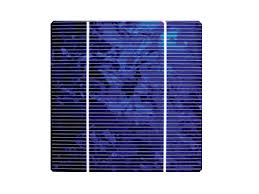
Moreover, the usual efficiency of solar system itself might not as efficient as expected. The three main types of solar panels frequently specified for use on building currently are Monocrystalline silicon, polycrystalline silicon and building integrated photovoltaics. Nevertheless, those panels are actually with very low efficiency. As is mentioned in recent researches, the maximum proportion of solar energy that could be transformed into electrical energy by such a panel is 22%. This could merely be achieved by monocrystalline silicon, which is of high cost and mainly applied on roofs. The other two solar panels could be a little bit cheaper, but their efficiency is even considerably low, around 10% to 12%. In consequence, solar systems could not be used as a sole source of energy. Other auxiliary tools, such as fossil fuels, have to assistant in some cases.
Monocrystalline silicon


polycrystalline silicon


Photovoltaics


It is still fortunate that Hefei Grand Theatre usually holds events in the evening. That is to say, most of the solar energy absorbed by its solar system is only applied at night. However, the amount of energy required by buildings with other functions might be double or more.
Last but not least, one of the most crucial obstacles for the spread of solar system is the cost, especially the cost of installation. Wherever the system is installed, at home or in solar farm, the capital costs are high. Furthermore, the installation of solar panels may cause large upfront fees. It requires clients effectively agree to pay, in advance, for the next few decades’ worth of power. That could be why even Suntech Power Holdings, once the world’s biggest solar panel maker, is having a hard time.
The Chinese government is offering considerable subsidies to encourage the construction of green architecture, but the subsidies are nothing new to the world. For instance, in 2012, the UK economy tripled its investment subsidies in green energy stating that spending on renewable energy generation will rise to 7.5 billion UKP per year until 2020.
In the future, the solar energy as a so-called “clean-energy” source should be undoubtedly encouraged in architectural practice, but it might not be applicable or desirable everywhere. It’s luck for Hefei Grand Theatre to be an example of when and where solar power could work.

 Reference: Fraunhofer Institute for Solar Energy Systems, ISE, 2016, Photovoltaics Report
https://www.ise.fraunhofer.de/en/downloads-englisch/pdf-files-englisch/photovoltaics-report-slides.pdf


2016年3月17日星期四

The Use of Solar Energy in Heifei Grand Theatre(1)

Recently, the ‘Two Sessions’ of the National People’s Congress, which is a significant national conference in China, was held in Beijing. In the ‘Two Sessions’, government should report their work and goals. In the field of architecture, ‘Green Architecture” was again pronounced to be a central issue in the following years. This reminds me of the ‘Two Sessions’ in 2013, where mandated topics like “sustainable construction”, “eco-footprint” and “clean energy” were discussed.
However, how is the conduction of those ‘green’ proposals?
In Hefei, the capital city of Anhui Province, the 57,000m2 Hefei Grand Theatre has attracted considerable attention from the public as one of the pioneers of green architecture.

Located near the Swan Lake on Huaining Road, the theatre is with massive curved roof, which is likened to waves in the original design concept. This typically literal approach to design is quite normal, but the attractive thing is the solar energy system inside the roof structure.
With the purpose of meeting energy-saving standard, solar panels with an area of 1352m2 have been equipped to absorb solar energy. The energy received will be transferred into electricity and help maintain the temperature all year round. Consequently, a large deal of cost will be save. Some data showed as follow could somehow demonstrate the advantages.
The solar panel system with a design life of 30 years could generate 120,000 KWH of energy annually. At the same time, a total of 3425 tons of CO2 is said to be reduced every year, and the amount of SO2 produced could be 11.1 tons less than before.

Simply in accordance with the data, the solar system of Hefei Grand Theatre should be considered as a success in China. The automatic system could not only save the cost of labour, but also become a model of much-vaunted green architecture.

However, could all buildings benefit from solar energy system nowadays? Maybe not. It is quite doubtful whether the policy of green architecture could be widespread, especially when we consider the various functions and locations of buildings; with varying degrees of servicing required and the fluctuating availability of sunlight. More detailed discussion will be showed in the next blog.

Reference: http://news.frbiz.com/hefei_theater_grid_solar_pv-237104.html